



In this Results Day instalment of The Data Drop, we’ve analysed over 6.75 million GCSE results from across the Arbor community. We’ve focused on some of the headline measures that matter most to schools and MATs, and below you’ll find our key takeaways from this year’s results.
–
5+ GCSEs at Grade 9–4 including English and Maths
This measure remains one of the clearest ways to track overall student attainment at GCSE. Looking at the past five years of results across the Arbor community, the proportion of students achieving at least five passes at grade 9–4 including English and Maths has shifted noticeably.
Results peaked in 2021, when around two thirds of students met the threshold. Since then, the percentage has fallen back, with 2023 and 2024 both closer to 59%. Early figures from 2025 suggest performance has remained broadly in line with the previous year.

–
Distribution of GCSE Passes (Grade 9–4)
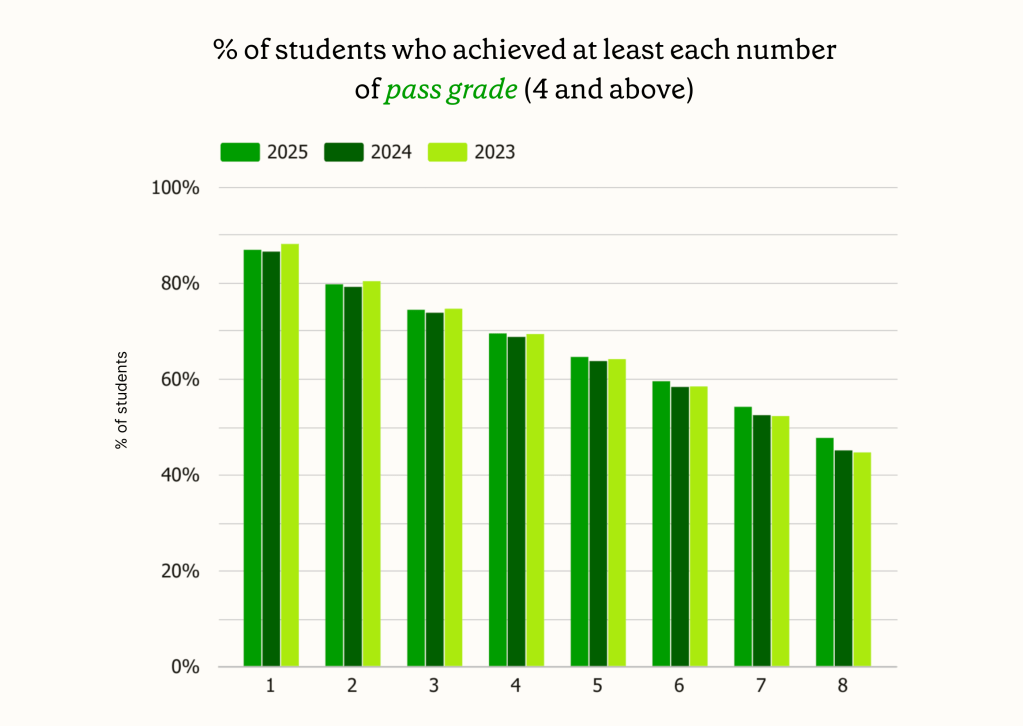
Looking beyond headline measures, we can explore how results are distributed across different numbers of passes. The chart below shows the proportion of students achieving at least 1, 2, 3, and so on up to 8+ GCSE passes at grade 9–4, comparing 2023, 2024 and 2025.
The overall distribution is fairly stable across these three years. What stands out in 2025 is the increase at the top end: nearly 48% of students achieved 8 or more passes, compared with around 45% in 2023 and 2024. At the same time, slightly fewer students fell into the mid-range (5–7 passes).
This suggests that while the overall headline measures are steady, more students are moving into the highest band of performance.
–
English and Maths (Grade 9–5)
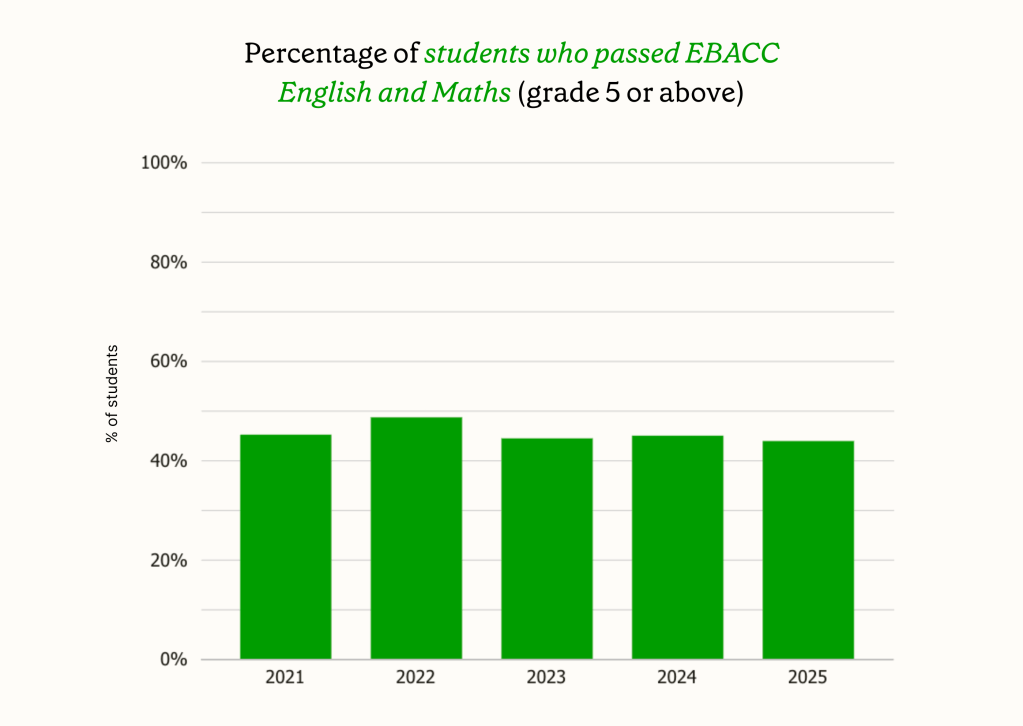
The combined measure of students achieving grade 9–5 in both English and Maths is often seen as a key benchmark. Across the Arbor community, 44.4% of students achieved this in 2023. This rose to 44.9% in 2024 before dipping slightly to 43.8% in 2025.
Overall, results remain steady, with the 2025 figure holding just above the 2023 level.
–
English (Grade 9–5)
English results have remained steady over the past three years. Around 60% of students in the Arbor community achieved a grade 9–5 in English in 2023 and 2024, with a very slight increase to 60.1% in 2025.
This consistency suggests English attainment at this benchmark has held firm, without the dips or shifts seen in some other measures.

–
Maths (Grade 9–5)
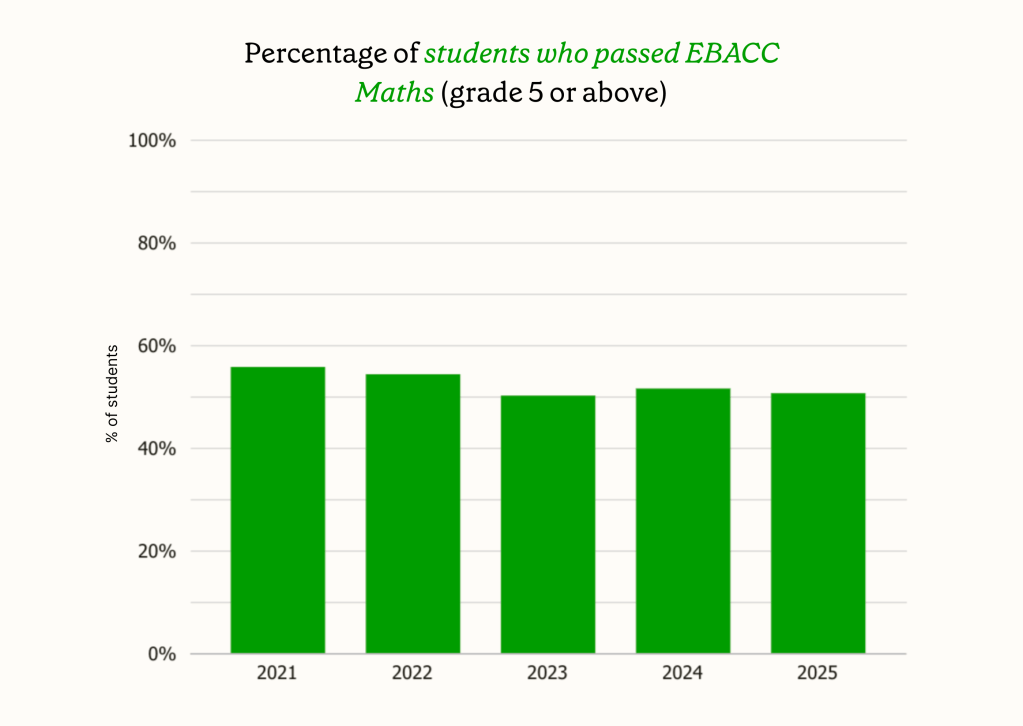
Maths results at grade 9–5 remain lower than English, with just over half of students achieving the benchmark. In 2023, 50.2% of students passed Maths at this level. This rose to 51.5% in 2024, before dipping back slightly to 50.6% in 2025.
Overall, the picture is one of stability, though with results continuing to sit a few percentage points below English.
–
Summary
The 2025 GCSE results across the Arbor community show a picture of stability. The proportion of students achieving 5+ passes at grade 9–4 including English and Maths has remained broadly in line with last year, and English and Maths individually continue to hold steady.
The distribution of passes stands out, with nearly 48% of students achieving 8 or more GCSEs at grade 9–4 this year, compared with around 45% in 2023 and 2024. This suggests a small but noticeable shift towards more students reaching the highest levels of attainment.
From everyone at Arbor, we’d like to extend our congratulations to all staff and students on the hard work that has gone into this year’s results. Keep an eye out for the next edition of The Data Drop, where we’ll continue to share insights from across the Arbor community.
–
Methodology
To compile this data, we’ve looked at students enrolled in Year 11 in English schools during this academic year, using results from qualifications approved by the DfE.
Results counted here include any pass grades, and in some cases a U in English or Science. It’s possible that a small number of students who didn’t achieve any GCSE Exam Awards may be missing, although most are likely to have at least an English entry or a vocational pass. This approach should also reduce the number of students who left before exams began, but those with early awards may still appear.
The figures are based on GCSE results only. As with any early results analysis, the numbers may shift slightly as data is updated. This snapshot reflects the position as of 16:00 on 20 August 2025.